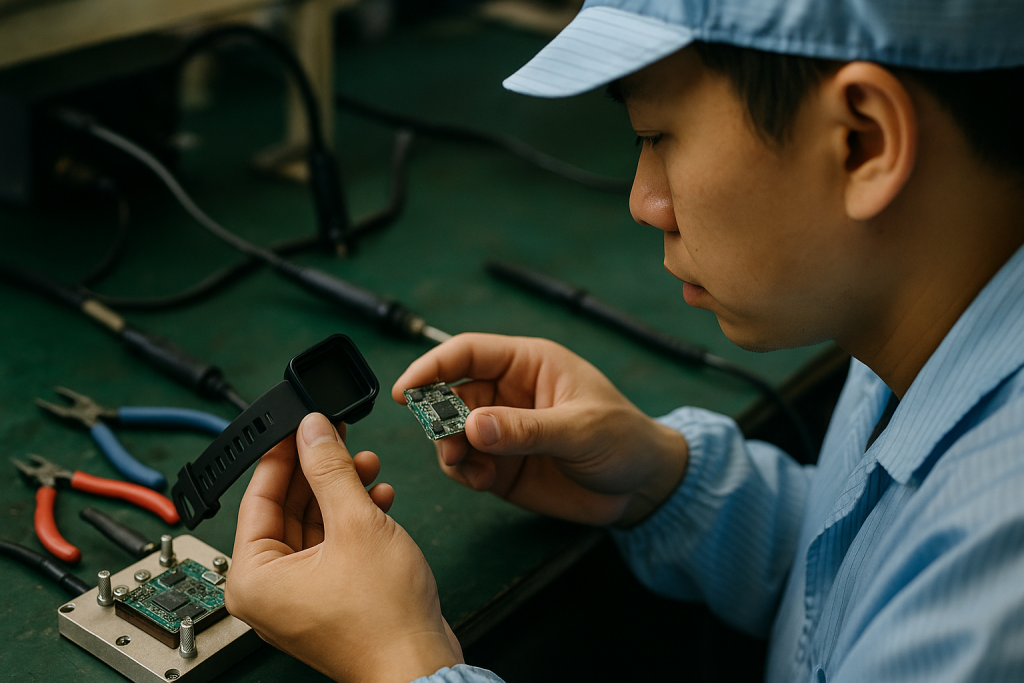
Decide early which tradeoffs to accept, and wearable electronics manufacturing becomes a project plan instead of a guessing game. At Shenzhen Futurezen Co. Ltd. our approach turns those choices into clear milestones for sourcing, testing, and assembly so your team focuses on the user promise.
Which battery option gets my product to market sooner in wearable electronics manufacturing?
Picking a battery is primarily a product decision. A standard cell that fits your enclosure shortens supplier search and testing, while a custom shaped cell buys runtime or a slimmer profile but adds validation steps. In the context of wearable electronics manufacturing, start with commodity formats for early prototypes and the first production release, then iterate to a tailored cell if user feedback shows a clear need.
Rule of thumb: choose the simplest cell that meets the user promise for launch. We handle supplier selection, safety testing, and paperwork so your approvals stay focused on user experience instead of component details.
How do I balance comfort and skin contact materials for my wearable?
Comfort is a user experience decision with direct impact on development time. Off the shelf medical grade silicone and common breathable textiles speed progress because test data and supply chains are available. Custom laminates or novel finishes require extra lab work and longer lead times, which changes the launch plan.
Practical guidance: match material durability to expected wear time and sweat exposure. We provide material samples and short wear trials so you can validate feel and fit without managing multiple suppliers yourself.
Which charging method matches my customers and timeline?
Choose the charging approach that matches your product promise. Contact-based charging like magnetic pogo pins is simple to implement and verify, USB-C is familiar and durable, and wireless charging can feel premium but needs alignment tuning and shielding work. That choice drives both mechanical design and test scope in wearable electronics manufacturing.
Rule of thumb: pick the method that meets user expectations for the first release. If you want a premium charging experience later, plan it as a follow-up. Our team integrates connector selection, charging circuitry, and enclosure details into the prototype phase so those choices convert to testable hardware quickly.
How do waterproofing, drop resistance, and sweat testing affect my schedule?
Water resistance and durability determine which enclosure tests and production controls are required. The IP Code, an ingress protection rating system that describes resistance to dust and water, helps define what to test and validate for a user claim. Everyday splash protection needs sealing and spray tests, while use-in-water capability requires more rounds of sealing and verification.
Make the user environment the starting point and let the manufacturing plan follow. We coordinate the appropriate tests and report results so you can approve a clear user-facing claim, without needing to manage lab selection or test sequencing yourself.
How do sensors, antenna placement, straps, and assembly tolerances get resolved?
These are integration and user experience decisions. Sensor placement trades off accuracy and comfort, while antenna placement balances connectivity and appearance. During development we prototype strap styles and enclosure placements, then validate performance in representative use. That sequence resolves mechanical and vendor choices early in the build cycle.
We stage integration work so the hardest user requirement is validated first, then the rest of the layout follows. This reduces rework and produces a converged parts list and assembly instructions in a few controlled steps.
| Choice | Time to market | Risk to schedule | Team involvement |
|---|---|---|---|
| Standard battery and off-the-shelf materials | Faster | Lower | Minimal |
| Custom battery shape or proprietary materials | Longer | Moderate | Higher (approvals and tests) |
| Pogo-pin charging | Faster | Lower | Minimal |
| Wireless charging | Longer | Higher (alignment and shielding) | Moderate |
| IP splash protection | Moderate | Moderate | Moderate |
| Full water submersion rating | Longer | Higher | Higher |
How we handle these choices in a real build
We begin by translating your product promise into three clear decisions: target runtime, wear style, and water resistance. From there we source candidate batteries and materials, produce focused prototypes, and run targeted tests that validate the user experience rather than just component specs. This keeps the project moving and shows tradeoffs early, so decisions are about users and features.
Throughout the program we manage supplier selection, sample tracking, assembly tolerances, and the lab verification needed to support your marketed claims. You approve the user-facing choices, and we provide concise milestone reports that summarize impacts on schedule and the parts list, leaving your team to focus on product priorities.
We also offer ongoing support through our services to help plan production releases and later feature upgrades. If you want an initial conversation, contact our team through /contact/ and we will turn your choices into a practical prototype and production plan.
FAQ
How big a battery can I realistically use in a wrist-worn device?
Battery size is constrained by the product envelope and desired runtime. For early runs choose a standard cell that fits the enclosure to speed sourcing. If users demand longer runtime we evaluate custom cells and include the extra validation work in the plan.
What skin-contact materials are best for prolonged wear?
Materials with established biocompatibility records, like medical grade silicone or approved textiles, are common choices. We prototype materials and recommend short wear trials when extended skin contact is expected.
Do I need wireless charging to be competitive?
Wireless charging can raise perceived value, but it increases development and verification work. Choose it only if the user experience or waterproofing goals justify the extra cycle. Otherwise a reliable contact-based charger usually gets you to market faster.
How do you validate waterproofing claims?
We run the enclosure tests appropriate to the user promise and report the results. For general background on standard ratings see the IP Code overview at https://en.wikipedia.org/wiki/IP_Code. The IP Code is a standard that specifies degrees of protection against ingress of solids and liquids, and it guides which tests we run.
If you want to discuss requirements, a prototype, or a manufacturing plan, contact our team and we will turn your product decisions into a practical timeline and prototype approach. We also list our full services at /services/.