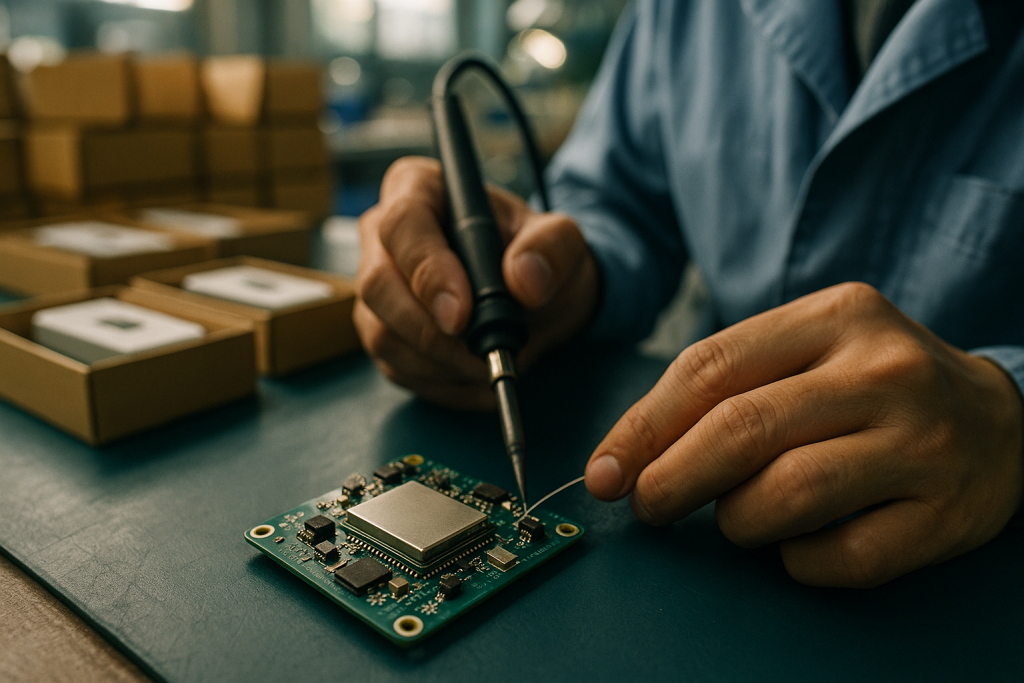
Decide the customer outcome first, not the technical steps
Do you want the product to power on and work right away as a pre-installed SIM device, or should buyers choose and activate their own cellular service after delivery? Make that choice before you finalize fulfillment, packaging, and support. The customer outcome determines who does the carrier coordination, how documentation reads, and what your manufacturing partner does before shipment.
Pre-installed SIM device, user-activated service, or eSIM pre-provisioned in plain terms
These three approaches create different buyer experiences and different operational workflows. Choose the outcome you want first, then align manufacturing, logistics, and support around that outcome.
If you choose a pre-installed SIM device, Futurezen will coordinate carrier enrollment and the verification steps so the unit arrives ready to connect. If you opt for customer-activated service, the factory ships without an assigned operator and buyers complete activation after delivery. An eSIM can be provisioned before shipment or provisioned at first use, so it supports both flows and adds the option to change carriers remotely later.
| Criteria | Pre-installed SIM | Customer adds service | eSIM pre-provisioned |
|---|---|---|---|
| Customer outcome | Arrives plug-and-play, minimal setup for end user | Buyer controls operator and plan, more steps at first use | Arrives ready to connect and allows later operator changes remotely |
| Operational outcome | Carrier enrollment handled before fulfillment, packaging reflects ready-to-connect state | Lower upfront carrier coordination for fulfillment, potential for higher activation support | Requires early agreements with provisioning platforms, simplifies later logistics |
| Best for | Consumer products, subscription hardware, nontechnical users or managed fleets | IT-managed deployments, resellers, or buyers who must choose carriers | Products sold across regions or that need operator portability without hardware swaps |
Terms your manufacturing partner will handle
Futurezen acts as the intermediary between your product team and carriers, turning the outcome you choose into repeatable production tasks. We do sequencing, carrier pilots, and the documentation your support and logistics teams need.
- eSIM, or embedded SIM, is a programmable SIM profile stored in the device and updated remotely, so you can change carriers without replacing hardware.
- IMEI is the device identifier carriers use to recognize a unit on their network. Carrier enrollment commonly references the IMEI during provisioning.
- Provisioning means enrolling the SIM profile and device identifier with a carrier so the device can connect. Provisioning can happen at the factory, over the air, or during first-use activation.
Which customers benefit from pre-installed SIM devices?
Products targeted at nontechnical consumers, managed fleets, subscription services, or field teams who install many units benefit most from a pre-installed SIM device. These buyers value plug-and-play simplicity and fewer activation steps, which reduces routine support inquiries.
If your buyers must choose a local operator, or your sales channel requires customers to control service selection, customer-activated service is a better fit. The decision should reflect buyer expectations and your support model, not just manufacturing convenience.
When should you choose eSIM versus a physical SIM
Choose eSIM when operator flexibility after shipment matters. An eSIM lets you switch carrier profiles over the air, which is useful for multi-region sales or devices that move between operators. A physical SIM is straightforward for a single-operator, local launch and avoids early carrier provisioning complexity.
eSIM deployments need early agreements with provisioning platforms and carriers, plus pilot activations to confirm the end-to-end flow. For industry guidance on eSIM standards and best practices, see GSMA guidance at https://www.gsma.com/esim/. Futurezen coordinates those pilots and converts carrier requirements into production and fulfillment steps.
How pre-installed SIM changes support and documentation
Shipping devices as a pre-installed SIM device shifts support focus away from step-by-step activation and toward coverage checks, provisioning errors, and hardware faults. Documentation becomes a short quick-start guide that tells the user the device should power on and connect, with concise troubleshooting steps for the most likely activation issues.
Futurezen prepares customer-facing setup copy and a one-page operational summary for logistics and support. We convert pilot results into clear actions for first-line support and prepared escalation paths to carriers, keeping materials short and actionable.
Operational tradeoffs product teams should expect
The core tradeoff is where the work sits. A pre-installed SIM device concentrates carrier coordination, provisioning, and verification before shipment. Asking customers to add service moves some activation steps to buyers and to post-sale support. Both approaches require pilot validation, but responsibilities fall on different teams at different times.
Decide sequence early, align packaging and quick-start language with the chosen flow, and define a simple returns process for activated devices. If operator portability without hardware swaps is important, plan for eSIM and the carrier agreements it requires.
How to validate connectivity before you ship
Validate the full user path in a pilot build that mirrors production packaging and fulfillment. Key checks include activation on target networks, antenna performance in the final enclosure, behavior when provisioning is delayed, and recovery steps when activation fails. Run pilots in the regions you plan to sell in so carrier handoffs and roaming behavior are tested under realistic conditions.
Futurezen runs pilot builds and operational validation, then converts findings into production instructions, packaging updates, and support scripts. For final confirmation we recommend carrier sign-off and lab verification for your target markets, followed by a small staged release before broad fulfillment.
FAQ
Will shipping ready-to-connect reduce early support calls?
Yes. Devices that arrive ready to connect typically reduce basic activation support. Plan concise troubleshooting steps and an escalation path to carriers for account or provisioning issues.
Is eSIM better than a physical SIM card?
Neither is categorically better. eSIM adds operator flexibility and simplifies logistics for multi-region products. A physical SIM can be simpler for single-operator, local launches. Match the choice to your target regions, buyer expectations, and fulfillment model.
Who handles device registration and carrier enrollment?
Futurezen manages device registration and carrier enrollment as part of the activation plan. We coordinate IMEI registration, provisioning profiles, carrier pilots, and the packaging and documentation that reflect the chosen flow. After pilots, we deliver an operational summary for logistics and support teams so your internal teams can operate the product without managing carrier details day to day.
Next step
Decide whether low-touch, plug-and-play delivery or buyer-controlled operator choice is the priority for your product. If you want help choosing and validating the right path, discuss your product requirements, prototype, or manufacturing plan with Futurezen. Tell us your target regions and the customer experience you want, and we will propose module options, provisioning approaches, and a phased validation plan that matches your launch. See our services at /services/ and contact us via /contact/. Futurezen and Shenzhen Futurezen Co. Ltd. will map the activation, testing, and packaging plan that aligns with your product goals.