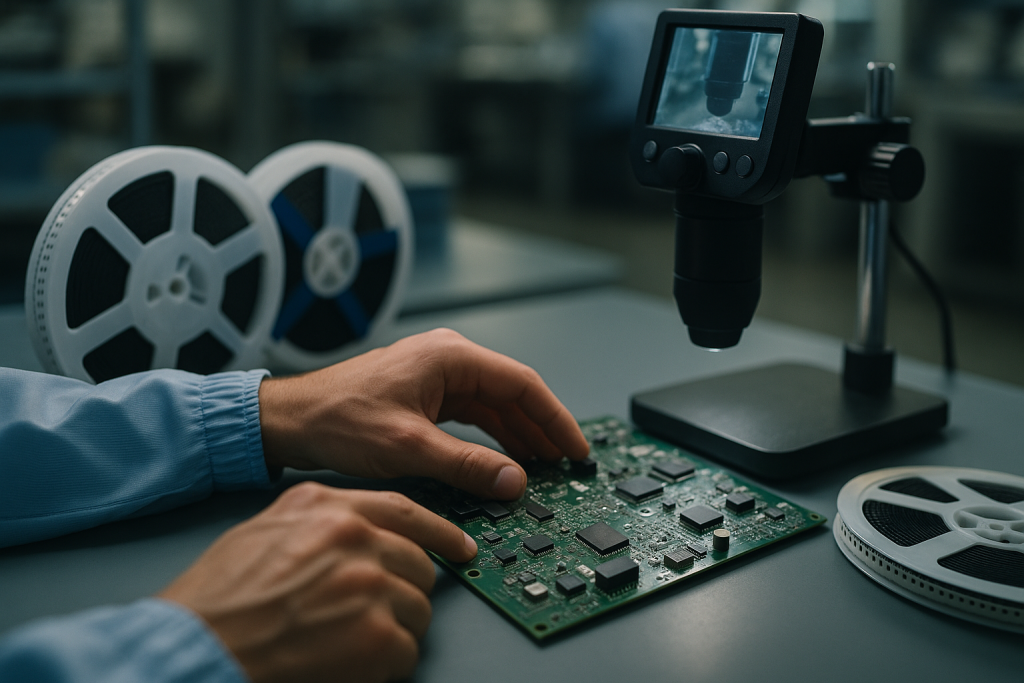
When component shortages electronics manufacturing appear, the primary decision is strategic: accept an approved alternate, build buffer stock, or redesign the product. Each path shifts who on your team needs to be involved and how long the launch will take. This article lays out the tradeoffs so you can choose with confidence while Futurezen handles the technical execution.
How do component shortages electronics manufacturing change timelines?
Component shortages electronics manufacturing change timelines by changing three things: the validation work required, the procurement and receiving steps, and the amount of design redesign work if any. Accepting an alternate generally preserves the planned build schedule with a short validation step. Buffer stock protects short term runs but requires procurement lead time and storage planning. A redesign reduces future exposure, but it lengthens the current schedule because of design and verification steps.
What does pin compatible and approved vendor list mean?
Pin compatible means a replacement part shares the same physical pin layout and electrical signals as the original, so the circuit board often needs no layout changes. Approved vendor list means the short set of suppliers we have already qualified for your product, so incoming parts can move straight into production once basic checks pass. We explain these in plain language so you know what we will validate, not to ask you to run the tests yourself.
Which option gets my product to market sooner?
For most launches, accepting an approved alternate is the fastest route to market. When the replacement is pin compatible and comes from a supplier on the approved vendor list, the technical team can validate it quickly on a small test build. That keeps pilot builds and initial shipments on schedule. Choosing alternates means you approve the strategic choice and our team executes the hands on work, paperwork, and validation.
What practical differences should I expect between the options?
Put simply, the options shift where the calendar and effort land. Alternates shorten the path to shipment but require fast approvals. Buffer stock lengthens procurement effort but buys schedule breathing room. Redesign reduces future supply exposure but adds design and verification time now. Below is a practical decision framework you can use to match the choice to your priorities.
| Option | Time to market | Supply resilience | Your team involvement |
|---|---|---|---|
| Approved alternate, pin compatible | Fastest | Moderate | Low approval effort |
| Buffer stock | Short delay for planning | Higher short term | Moderate, forecasting input |
| Redesign | Longest | Lowest long term | High, design review and validation |
How does Futurezen handle shortages on a real build?
We sequence the work to keep the decision strategic and the execution technical. First, we run an early parts list review to flag parts with lifecycle notices or single source exposure. Then we present ranked options, from fastest to most robust, and the timeline implications for each. If you pick alternates, our engineers source likely replacements, perform hands on validation on a controlled test run, and document the change so production moves forward. If you pick buffer stock, our procurement team plans quantities and lead times and manages receiving and storage. If you choose redesign, we limit the scope, stage the validation steps, and protect parallel work so other parts of the program continue to progress.
Throughout, we keep communication focused on the strategic choices you need to make. We do the technical judging, sequencing, and vendor checks. That way you avoid getting pulled into daily technical tradeoffs, and your approvals remain concise and decision oriented.
When should we plan and review parts lists?
An early parts list review is the single most effective step to avoid schedule surprises. Review the parts list before detailed prototype runs so there is time to secure alternates or arrange buffer stock without interrupting scheduled builds. We can run the review and present clear choices, along with recommended next steps and expected calendar impacts, so your time is used for tradeoff decisions, not technical follow up.
What catches problems early so a swap does not become a delay?
Good sequencing catches the most likely issues before a production hold. We start with compatibility checks, then functional tests on a small batch, and finally the paperwork to include a replacement on the approved vendor list. This staged approach keeps the validation scope small and focused. If a replacement needs minor firmware or mechanical tweaks, we isolate that work to avoid cascading delays across the program.
FAQ
How long will a parts change delay my launch?
Minor swaps using pin compatible parts from an approved vendor tend to add a short validation window, often a few weeks rather than months. A full redesign will be longer because of design changes and verification. Exact timing depends on the path you select and the tests required.
Can you evaluate alternates if my team is not technical?
Yes. Futurezen handles the technical evaluation and hands on testing. You review the strategic recommendation and approve the direction, and we take care of supplier engagement, validation runs, and documentation for production.
Should I build buffer stock now?
Buffer stock is practical when shortages look temporary or lead times are unpredictable. It shifts work to procurement and storage planning, which we can manage for you based on your forecast inputs. We will explain how long that buffer will likely help and when it becomes less effective than other options.
When is a redesign the right choice?
Choose redesign when a part shows repeated supply problems, lifecycle risk, or when the product roadmap benefits from a newer component family. Redesign pays off long term but it does lengthen the current delivery schedule.
Next steps and how to get help
If you want to understand how component shortages electronics manufacturing affect your specific program, our Shenzhen team can run an early parts list review and present clear options in one meeting. Discuss your requirements on our services page at /services/ or schedule a conversation at /contact/. For industry context on supply trends see the Semiconductor Industry Association at https://www.semiconductors.org/.
Shenzhen Futurezen Co. Ltd. is a product development and manufacturing partner. We handle the technical details, sequence the work to protect your timeline, and bring vendor judgement you can rely on. If you are planning next steps, share your product requirements, target parts list, prototype stage, and certification path so we can review the manufacturing plan before the build advances.